Unreliable narration and uncertainty of perception
The Woman in the WindowUnreliable narration and uncertainty of perception are central to the way the novel makes Anna Fox’s account both intimate and unstable. Because the reader encounters crucial events through Anna’s perspective, her sincere certainty can make an imagined scene feel witnessed and a real person seem doubtful. The eventual correction is not simply that Anna was wrong: Jane Russell was real, but Anna had also built scenes and explanations around her that she could not reliably distinguish from experience.
A perspective under pressure
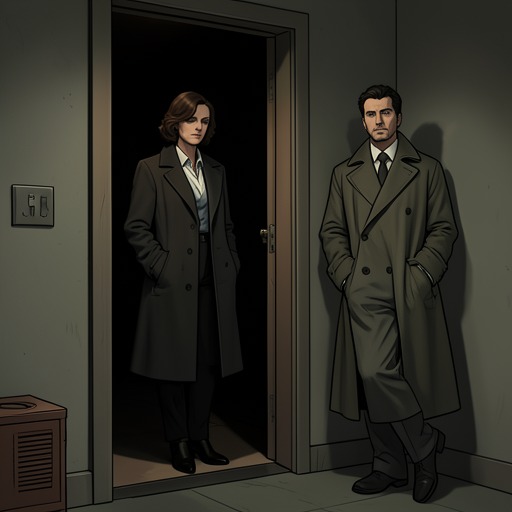
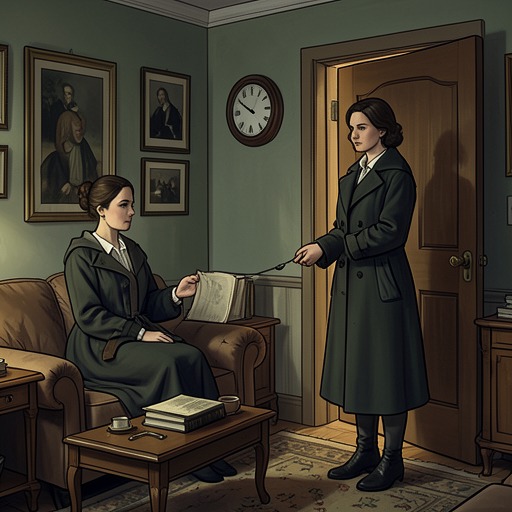
The uncertainty becomes explicit when Detective Little tells Anna that the woman at 207 is Jane Russell, the person she claims to be. He suggests that Anna may never have met the woman she remembers helping her from the street, and that the encounter may have been a dream. Anna does not resist the possibility. She tries to picture herself hauling herself up the front steps and into the house, as though the effort might have been hers rather than Jane’s. What had seemed like a remembered rescue becomes a scene she can almost, but not quite, remember performing herself.
The same revision reaches beyond that first encounter. Anna recalls Jane playing chess and drawing pictures with her, but the recollection now comes entangled with bottles and pill canisters, chess pieces, and Anna’s own hands hovering over the board. She remembers practicing Jane’s signature on the steamy shower door, where the letters disappeared. The detail gives her suspected invention a concrete form: Jane’s name may have been something Anna wrote and watched vanish, rather than proof that Jane had been present. Her memory supplies images, but the images no longer establish what happened.
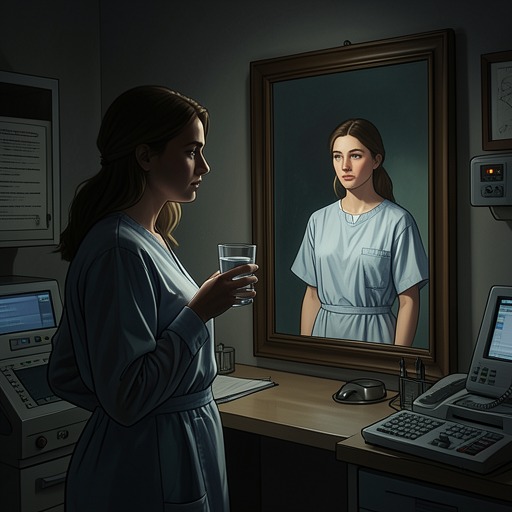
This is not presented as a simple act of conscious deception. Anna’s changing account reflects the limits of her access to events while distressed and under chemical influence. Her mind can supply an apparently coherent scene, then expose details that make the scene uncertain. The reader shares that restricted access: there is no independent view of the remembered encounter to settle the question at the moment Anna asks it. The account’s intimacy therefore produces suspense as well as sympathy, since the same closeness that makes her experience vivid prevents it from serving as unquestionable evidence.
Seeing a murder through cinema
Anna eventually reinterprets what she thought she saw on the night of the supposed killing. Rather than a murder with a visible killer and victim, she recognizes that her account may have assembled a crime from an empty sitting room and a vacant sofa. She describes her vision through the framework of Rear Window, Body Double, and Blow-Up, films that turn looking into a source of suspense and uncertainty. In her account, cinematic images do not merely resemble events; they help organize what she thinks she has witnessed.
That framework complicates the distinction between observation and interpretation. Anna has watched the neighboring house, and the habits of a thriller give her scattered impressions a plot: a crime, a victim, and a hidden explanation. Yet she concludes that she saw what loneliness and need led her to see. The imagined murder has no killer or victim because, in this revised understanding, it was not an observed crime at all. Her confession redirects attention from the apparent scene to the process by which she made it meaningful.
Anna connects this process to her growing recognition that she has distorted the facts. She has also spoken to Ed and Olivia as though they were present, and she treats that as evidence that she could have staged a murder in her mind, especially with chemical assistance. She moves from allowing that she might have been mistaken to accepting responsibility for her mistaken account. This movement matters: the narration does not resolve uncertainty by making Anna’s earlier conviction harmless. Instead, she recognizes that her interpretation affected what she believed and reported, even when she had experienced it as real.
Doubt, confirmation, and Jane’s reality
The police exchange also separates the question of Jane’s identity from the question of Anna’s memories. Detective Little confirms that the woman at 207 is who she says she is, while proposing that Anna’s earlier meeting may not have happened. Anna accepts the confirmation about Jane but remains unsure about the remembered scenes. Her certainty does not return all at once; it breaks into separate claims that can be reconsidered individually, including whether Jane visited, whether Anna saw an attack, and what the objects and memories signify.
A later photograph further unsettles any conclusion that Jane was wholly imaginary. When Anna reviews an earlier image, she remembers taking it from the kitchen window: a sunset over distant buildings, with a bird in the sky and Jane’s reflection in the glass. The photograph had been made without Anna identifying the reflection as evidence of Jane’s presence. Its importance lies in that gap between taking an image and understanding it. Anna later remembers Jane’s encouraging words and concludes that Jane was real; she then rushes from bed to the window and pulls back the curtains. The moment turns an overlooked trace into a reason to act, while preserving the distinction between Jane’s actual existence and Anna’s uncertain recollection of particular encounters.
Narrative significance
The novel’s uncertainty is therefore selective rather than absolute. Anna’s perception can create a false scene, and her memories of Jane can become suspect, but the later photograph and Anna’s recognition of Jane’s real presence resist the conclusion that everything was invented. The reader must revise earlier judgments alongside her, weighing remembered experience against new confirmation without treating either vividness or doubt as proof by itself.
This shifting account also makes self-correction part of the narrative’s action. Anna’s admission that she was deluded and responsible marks a change in how she understands her own authority: she no longer treats conviction as sufficient verification. Yet the image of Jane in the glass prevents that admission from becoming a final dismissal of every perception. The concept’s central tension is that Anna can misread what she sees and still have seen something real. The reader’s task is to follow those changes in evidence and interpretation, distinguishing the woman who existed from the scenes Anna may have made around her.